Ruth Singer
Exploring different research resources
Whatever subject or theme you are exploring, it's useful to think about the different types of research sources you use. It's tempting with creative making to look at other artists work as our inspiration and source material but I encourage you to avoid this if possible and investigate other types of sources. This is a revised version of a workbook that I first shared last summer (on the old website) and I'm re-issuing this now for more recent members and for anyone to revisit. There was a page about co-creation in here too which I'm reworking for another time.
A reflection question to go alongside this:
What is the most exciting or appealing aspect of the sources and research that you are doing? What is the feeling or emotion that the research is creating? What can that tell you about the focus of your work?
An example: I shared my initial ideas about new work around deserted medieval villages here. My research sources are visits, reading about archaeology, reading about medieval life, archaeology tv programmes and actually a lifetime of interesting including a degree in medieval history!
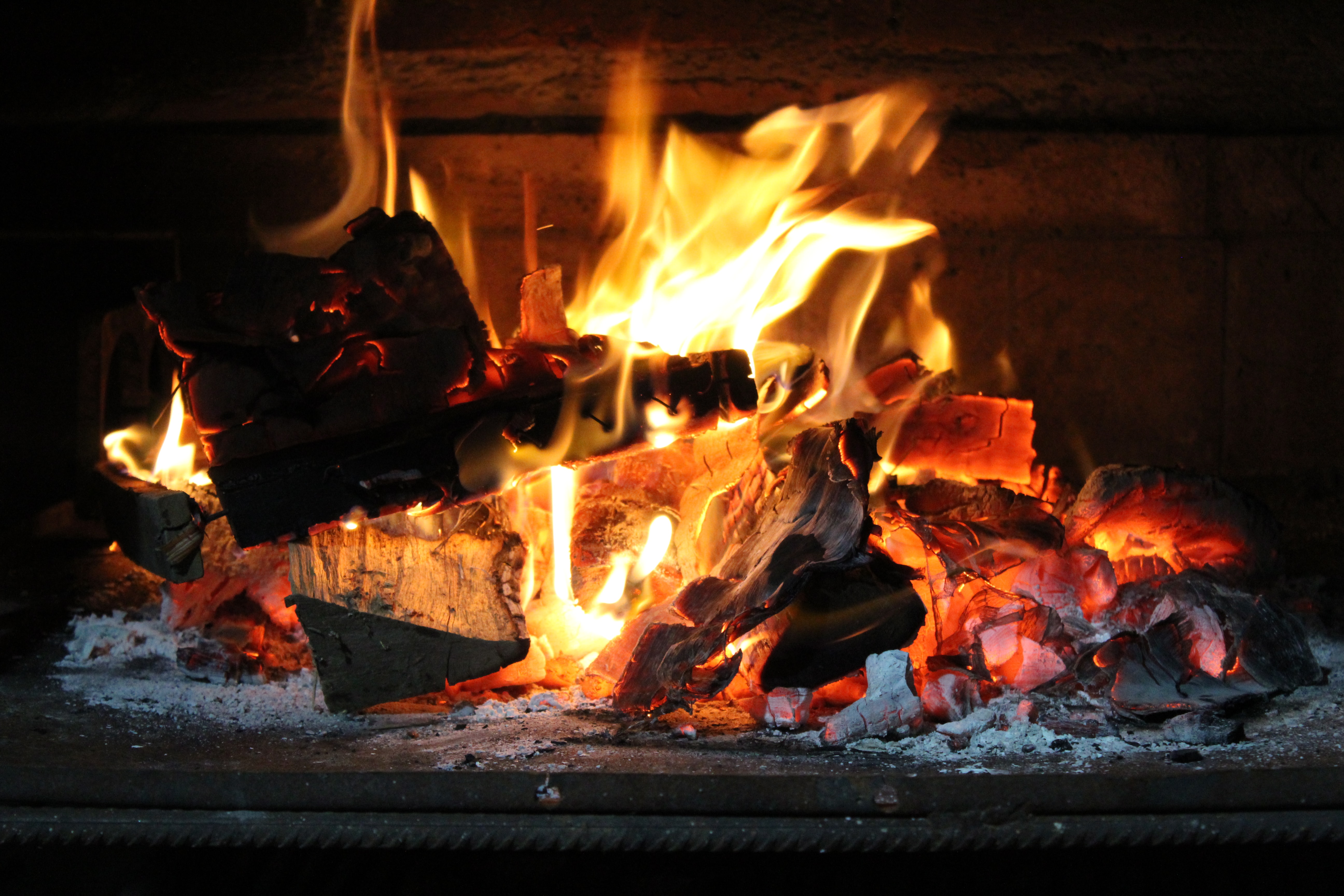
From this I have a huge amount of information and no clear direction to what I was doing. So I asked myself the questions above and found that was was bubbling away underneath this was about homes and loss of homes, about people being displaced and evicted from the place they were born. I thought about the archaeological evidence as actual homes and what it was like to live there. I thought about the evidence that we have of daily life inside the homes and that made me remember reading about nettles growing where the hearth was. The hearth, the fire as the heart of the home, for heat, light, cooking and cleanliness. So my focus for the work is around the hearth and the fire and the experience of displacement. And that has led to ideas for the work I want to make which tells the story that engages with me emotionally.
I hope that's useful in thinking about moving from research to making and the process of exploring and analysing your own ideas. Please do share some of your research resources and the directions that your research is taking you.
Project Books (taster)
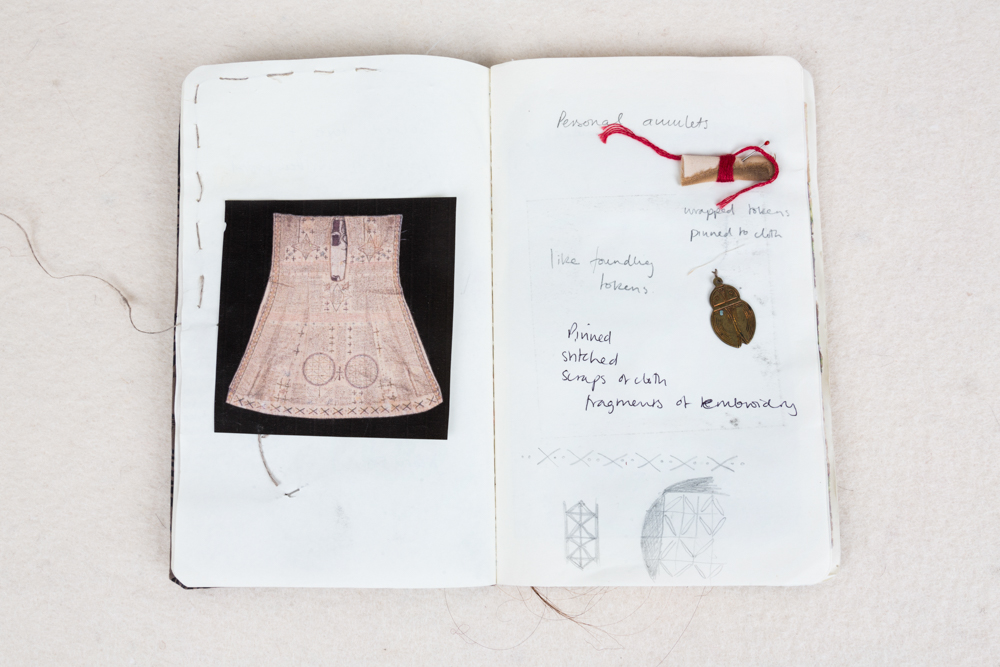
I suspect when say sketchbook, a lot of you will be cringing and saying ‘please no, don’t make me use a sketchbook, I can’t draw’. I am not here to make you do anything but I do want to talk through some reasons for using a sketchbook. Would it help to call it something else? Notebook? Ideas book? Project book?
I've posted earlier today on my blog about some of my sketch books which you might find useful to explore before working through this post about creating and using a book of some sort for your work.
I used to be completely resistant to sketchbooks because I don’t really draw but as I have developed my work, I have found that project books are really useful to me. I wish I had kept a record of my development work for the first narrative project I did, Figures of Africa, and for the early part of Criminal Quilts. I have bits and pieces of the thinking around these projects in other notebooks and sketchbooks but nothing that is really useful to me in either looking back or revisiting interesting ideas I didn’t complete.
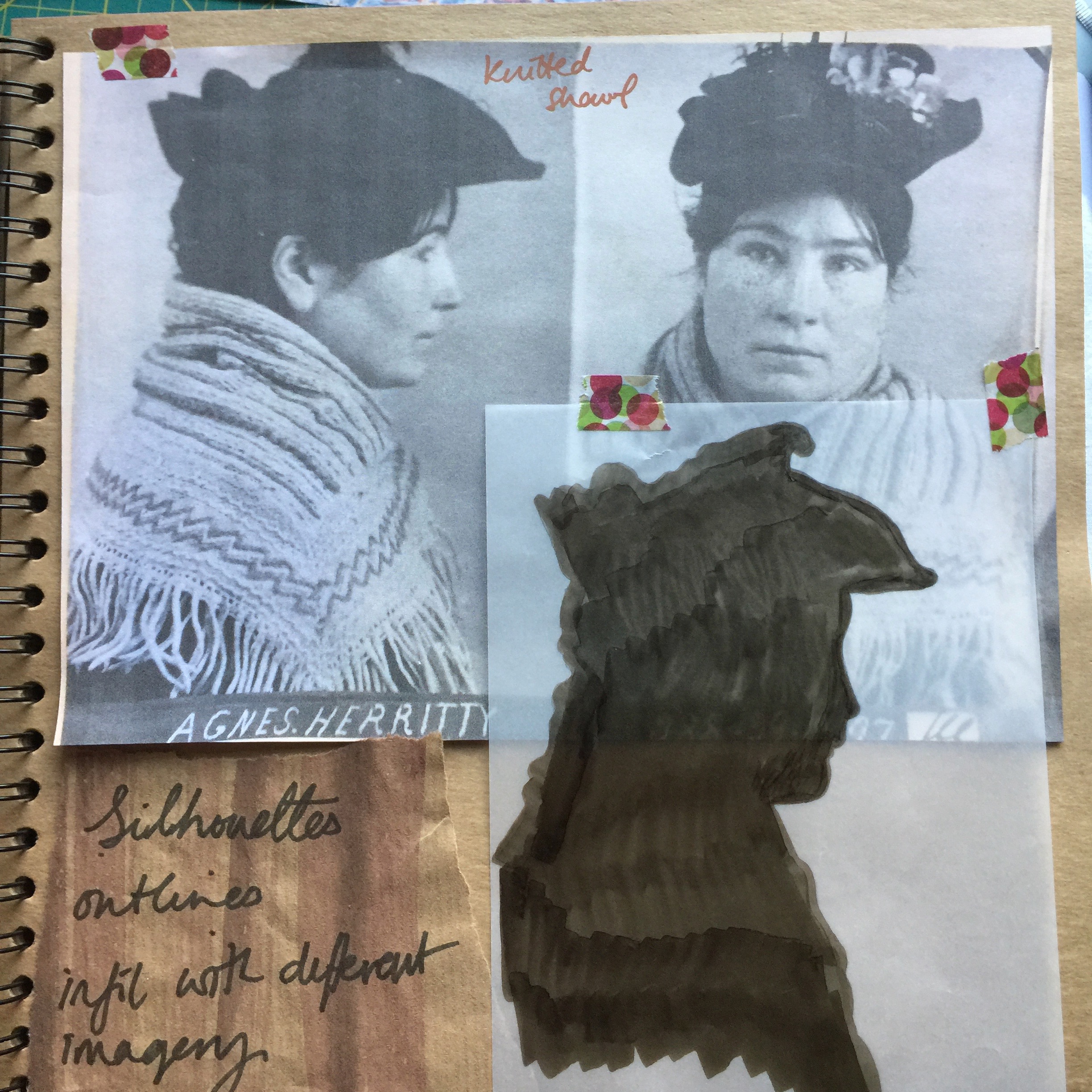
I know plenty of artists teach a method of sketch booking or share their own style. I don't have a set of rules to follow but just want to share how I use project books and if you would like to try this, please do.
Firstly think about how you like to work. Are you expansive and messy and use lots of things? Are you neat and meticulous and work small? Or something in between? I am quite big and messy really so I prefer to use a large book which gives me lots of space for writing, drawing, collaging and creating. I have used small project books when I know I need to carry them around for research visits and taking into museum stores etc. But for my creative and experimental work, I like a bigger book. Some of my project books are A3 which gives me a huge spread of pages to work on, although some of the square ones are a little smaller. I also love brown Kraft paper books although they are not fun to draw or write on easily. Sometimes I add my written or drawn work on other paper and paste it in. But the brown background works for my style. Otherwise I use pretty simple stapled books or spiral bound when I know it will be viewed a lot for projects.
This is sample content from Maker Membership. To access the full post and many more please join the membership.
Going deeper into your research
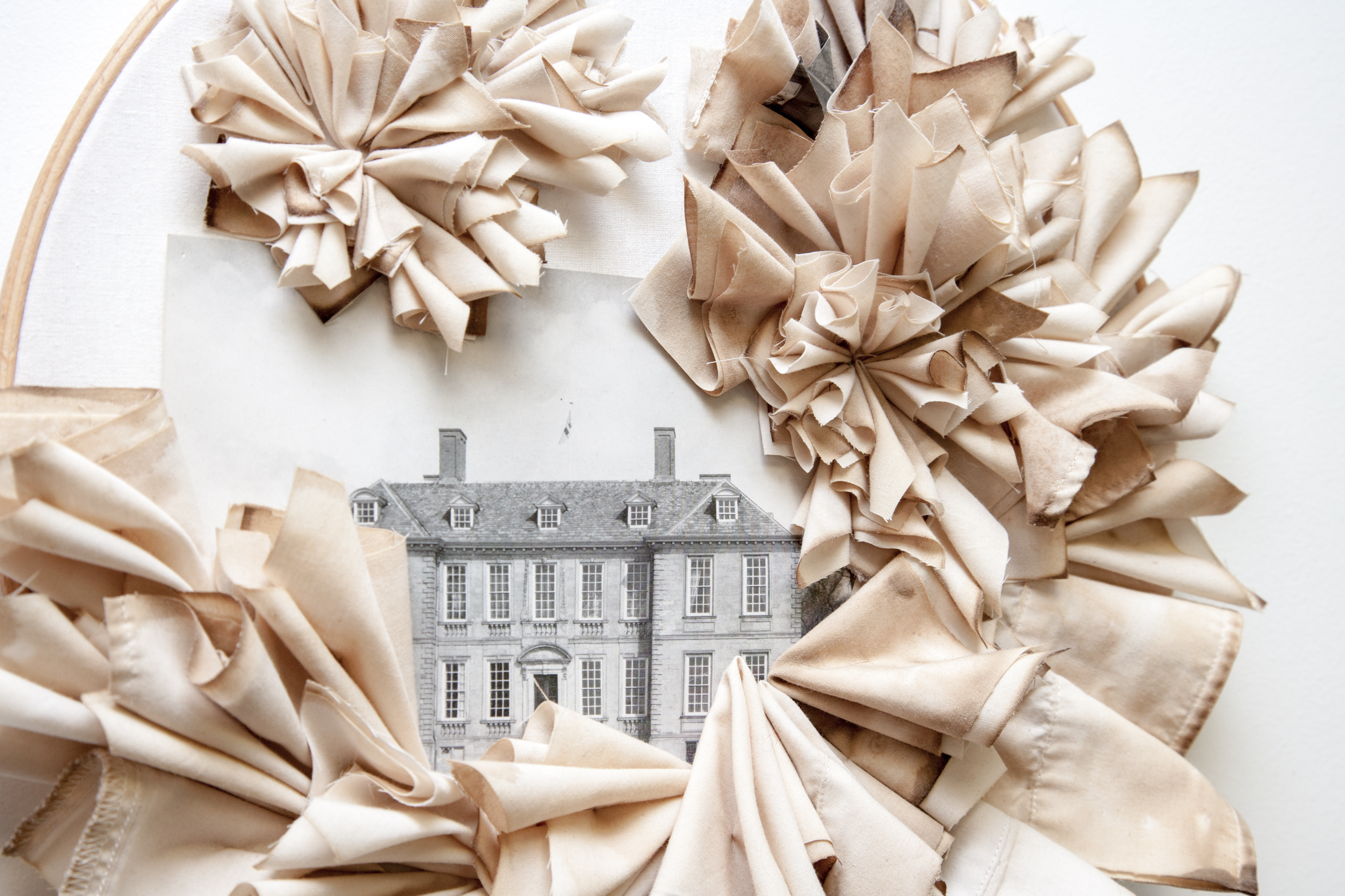
Over the last few months lots of discussions have come up about focusing your research for your creative projects to help you find something that feels authentic and original.
I'm going to share some principles of creative research which I hope will help:
1. Going deeper rather than broader. While exploring for ideas and focus it is very easy to go very broad, researching around a subject in all sorts of directions. It's good to start with a broad exploration of your research theme but trying to cover too many areas just means we spread ourselves too thin. Concentrating for a time on two or three areas and going much deeper into them might help you find some of the focus you feel is missing. I'll give an example using a brief I saw recently to make new work inspired by the Egyptian gallery in a local museum. This is a very broad topic and almost impossible to tackle. So first of all I would explore broadly, maybe by mind-mapping some ideas in response to this, in order to find a few key routes to delve deeper into. There's the visual inspiration in the gallery - design, materials, function of objects. I think of this as surface level as I'm looking at the visuals not the stories within. So then I would go a layer deeper, maybe thinking about materials or making processes and see if that brings up something interesting. A layer deeper might be thinking about the makers of these surviving objects, or the archaeologists who dug them up. A deeper layer might be about Egyptian people seeing their ancient historical artefacts dug up and sold to western museums and collectors, taking me to repatriation of historical objects and current museum ethics.
So immediately we've gone from the purely visual to the much more complex social, political, colonial, human and personal stories associated with these artefacts. To take this deeper, I would research the museum catalogues for records of the archaeological expeditions involved, read more about excavations at the time, find out of there are contemporary accounts from Egyptians themselves, what has the museum got to say about colonialism in reference to these collections? Listen to podcasts and radio programmes, read novels and non-fiction. If you didn't know, you might have guessed, that I worked in museums as my first career and have a lot of thoughts about this - forthcoming episode of the podcast discusses this too! This is just an example of my thinking, going deeper into one or two themes within the much broader subject to find something that really fascinates me. Going from this research to making work can be tricky, I realise that. I'll come back to that later in the year when I've talked to more of you about the challenges you have with this.
This is a sample of Maker Membership content. To access the full post with two more recommendations on deepening your research, join now for free access to this post and the full archive, as well as new posts every week or so.
How I got here
.jpeg)
I get asked a lot how I got to where I am, with the subtext of "how do I get to where you are?". The short answer to that is spend 46 years being me! What they mean of course is "what are the steps I need to follow" which also isn't a very easy to answer.
I started my working life in the museum sector. I did a Masters Degree in Museum Studies (after a first degree in Medieval Studies) and worked in a variety of museums in my 20s. I then, quite simply, quit my job and rented a studio and became a maker. It wasn't as easy as that of course, but that's the basics. I learned on the job. It's been enormously hard work but I wouldn't be the artist or the person I am if I hadn't done it that way. Also my mum was self employed throughout my teens (and still is at 76!) so I had a role model for running your own business and creating a life that works for you.
I loved working in museums but I also craved creativity and autonomy, being able to make decisions myself about what I was going to do. And not have a manager! As I approached 30 I was contemplating either doing a PhD in textile history, or setting up my own creative business running workshops, teaching textile history and making things for a living. I still yearn after the research life sometimes but I know I am better off doing what I do. I saved up, I set up some freelance work, I worked out how to live very cheaply and I just started making. I've gone through a whole load of different variations on being an artist / freelancer / tutor / studio owner. Some of them worked out and some of them didn't but all of them helped me to get to where I am now. I have written books, I have exhibited, I have had commissions from arts organisations, I have won prizes, I have applied for and got funding. I have also failed at all of those things many more times than I have been successful. What you see is the tip of the iceberg. I don't particularly recommend following the same steps as I've done as so many of them have been cul-de-sacs and even sheer cliffs!
What is really most important is that you be yourself, not try to follow my creative path. What was right for me won't necessarily be right for you. You have to find your own path and this membership is designed to help you uncover and follow your path and walk along it with your own footsteps. Is this metaphor getting a bit too stretched? Maybe.
Anyway, there are lessons I have learned through getting things wrong, getting things right (often by accident) and from learning from others, both in my mentoring and support roles and from seeing friends work things through themselves.
Working out who / what you want to be as a creative person isn't a simple task. It takes time. It changes all the time. I don't have the same ambitions or goals as I did pre-pandemic because the world, and I, have changed.
Rest is part of the work. You can't be creative when you are exhausted. This applies to pandemic life as well as more day-to-day times.
Other peoples' successes might not be yours. And yours will be yours alone. External markers of success are generally not what really fulfils us. It's vital to work out what is most important to you in your creative practice. Making an income from your work doesn't have to be the main goal unless you absolutely need it to be.
Your creativity needs to be nurtured. You need to give it time, space, food and water to grow. This membership is some fertiliser for your creativity.
You are an artist. You have a story to tell through making and you are in the process of uncovering that story and sharing it with the people who matter.
I hope you will join me in Maker Membership to explore and discover.
Sampling
I've created a video showing some of my samples, experiments and happy accidents plus some project books of different types. I hope this is useful to you in seeing how you might use small scale samples to test ideas and materials, and that some happy accidents will occur!